
 EN
EN


When a private label fashion brand reaches the point where demand starts outpacing capacity, the question of infrastructure becomes unavoidable. At the center of that infrastructure sits one critical partner: the clothing manufacturer. Whether a brand is moving from small-batch drops to consistent volume, or transitioning from generic wholesale to fully branded product lines, the relationship with a capable clothing manufacturer shapes nearly every outcome that follows. Scaling is not simply about selling more — it is about building the operational backbone that makes sustained growth possible.
Private label fashion businesses operate in a uniquely competitive space where product differentiation, brand identity, and supply chain reliability all intersect. A clothing manufacturer is not just a production vendor in this context — it is a strategic enabler. The right manufacturing partner determines how fast a brand can respond to market trends, how consistently it can deliver quality, and how efficiently it can manage costs as order volumes grow. Understanding why a clothing manufacturer matters so deeply to scaling is essential for any founder or brand operator serious about long-term growth.
The Role of a Clothing Manufacturer in Private Label Growth
From Concept to Scalable Product Line
Private label brands are built on the premise of owning the product — the design, the branding, the customer experience. But ownership of the product is only meaningful when the product can be produced reliably and at scale. A clothing manufacturer bridges the gap between a brand's creative vision and its physical execution. Without a manufacturer capable of handling increased complexity and volume, a brand's growth ceiling is set by production constraints rather than market demand.
When a clothing manufacturer has the technical capability to work with custom specifications — fabric weights, garment construction, washes, finishes, and labeling — a private label brand gains the ability to build a truly differentiated product line. This differentiation is what justifies premium pricing, builds customer loyalty, and creates barriers to imitation. A manufacturer that can only produce generic styles limits the brand's ability to stand out in a crowded market.
Scaling a private label line also requires consistency across production runs. A clothing manufacturer with robust quality control systems ensures that the fifth production run matches the first in terms of fit, color accuracy, and construction quality. Inconsistency at scale erodes brand trust faster than almost any other operational failure, making manufacturing quality a direct driver of brand equity.
Production Capacity and Order Volume Flexibility
One of the most practical reasons a clothing manufacturer is important for scaling is production capacity. As a private label brand grows, order volumes increase — sometimes rapidly and unpredictably. A manufacturing partner that cannot accommodate volume surges forces brands into difficult choices: turning away demand, splitting orders across multiple vendors, or accepting longer lead times that frustrate customers.
A clothing manufacturer with flexible capacity planning can absorb growth without forcing the brand to constantly search for new production partners. This stability is particularly valuable during seasonal peaks or when a product goes viral through social media or influencer exposure. The ability to scale up production quickly, without sacrificing quality or lead time, is a competitive advantage that directly translates into revenue capture.
Beyond raw capacity, a clothing manufacturer's willingness to work with evolving minimum order quantities matters significantly. Early-stage private label brands often need lower minimums to test new styles, while established brands need higher-volume runs at competitive unit costs. A manufacturer that can accommodate both stages of growth becomes a long-term partner rather than a transactional vendor.
How a Clothing Manufacturer Affects Brand Identity and Product Quality
Custom Development and Technical Collaboration
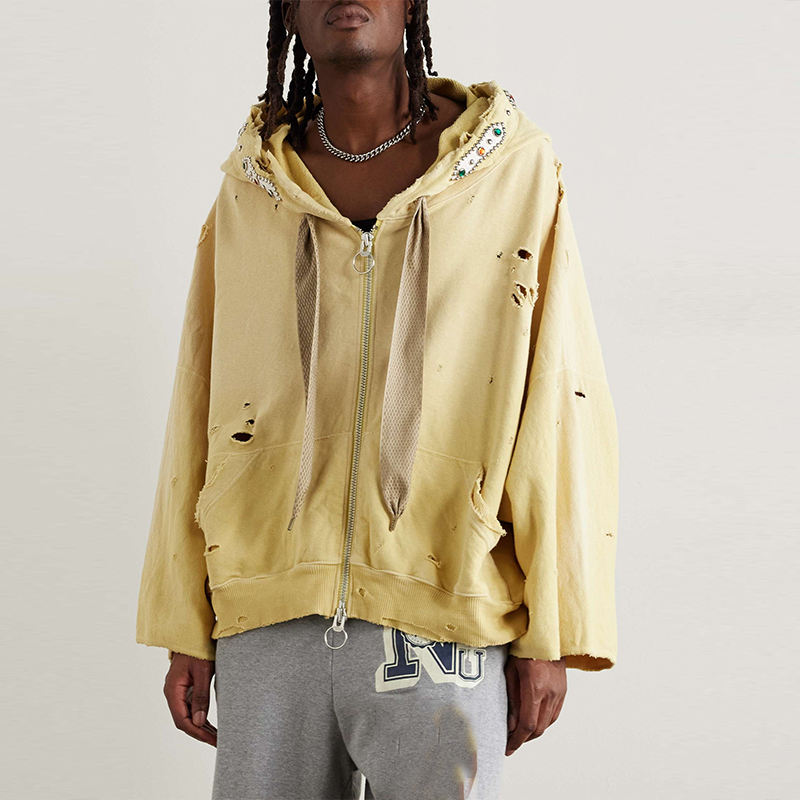
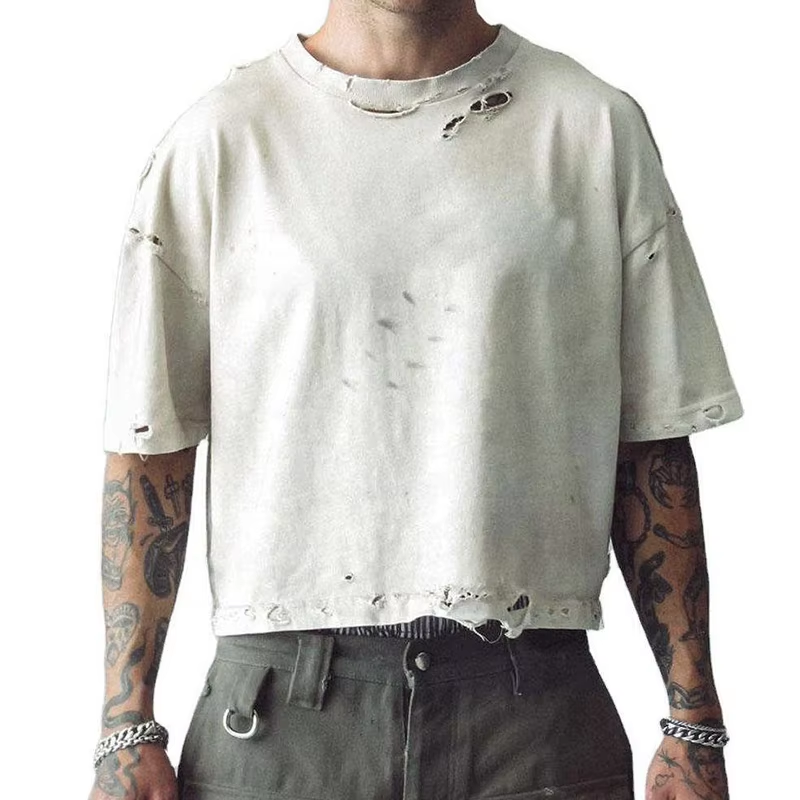
Private label fashion is fundamentally about owning a distinct product identity. A clothing manufacturer that offers genuine custom development capabilities — including fabric sourcing, pattern making, sample development, and technical specification management — gives a brand the tools to build something proprietary. This is especially important in categories like streetwear, where details such as garment weight, vintage washes, distressed finishes, and boxy silhouettes define the product's appeal.
Working closely with a clothing manufacturer on technical development also builds institutional knowledge. Over time, the manufacturer understands the brand's standards, preferred materials, and construction preferences. This accumulated knowledge reduces sampling iterations, shortens development cycles, and improves first-run accuracy — all of which translate into faster time-to-market and lower development costs as the brand scales.
Technical collaboration with a clothing manufacturer also opens the door to product innovation. Manufacturers with strong R&D capabilities can introduce new fabric technologies, sustainable material options, or construction techniques that keep a brand's product line fresh and competitive. For private label brands competing on product quality rather than price alone, this kind of partnership is invaluable.
Branding Integration at the Manufacturing Level
A clothing manufacturer that supports full branding integration — custom labels, hang tags, packaging, embroidery, screen printing, and woven patches — allows a private label brand to deliver a complete branded experience from the moment a customer opens the package. This level of integration is not cosmetic; it is central to how private label brands build perceived value and justify their price positioning.
When branding is handled at the manufacturing level rather than outsourced to separate finishing vendors, the process is more efficient, more consistent, and less prone to errors. A clothing manufacturer that manages branding in-house reduces the number of handoffs in the supply chain, which directly reduces lead times and the risk of quality discrepancies between production and branding steps.
For scaling brands, this integration also simplifies logistics. Receiving finished, fully branded product from a single clothing manufacturer is operationally cleaner than coordinating between a production factory and a separate branding facility. As order volumes grow, this simplicity compounds into significant time and cost savings.
Supply Chain Reliability and Scaling Risk Management
Consistency Across Growing Order Volumes
Supply chain reliability is one of the most underestimated factors in scaling a private label fashion business. A clothing manufacturer that delivers consistently — on time, at the agreed quality level, and within cost parameters — removes a major source of operational risk. Inconsistent manufacturing creates a cascade of downstream problems: delayed launches, inventory shortfalls, customer service issues, and cash flow disruptions.
As a private label brand scales, the stakes of supply chain failures increase proportionally. A delayed shipment that was manageable at 500 units becomes a serious business problem at 5,000 units. A clothing manufacturer with proven logistics capabilities, transparent communication, and proactive problem-solving becomes more valuable — not less — as the brand grows. Reliability at scale is a rare and genuinely important quality in a manufacturing partner.
Brands that invest time in vetting and building relationships with reliable clothing manufacturers before they need high-volume production are better positioned to scale smoothly. The cost of switching manufacturers mid-growth — resampling, re-approving quality standards, rebuilding institutional knowledge — is high enough that early investment in the right partner pays dividends over time.
Cost Efficiency and Margin Protection
Scaling a private label business is only sustainable if margins hold as volumes grow. A clothing manufacturer plays a direct role in margin management through unit cost negotiations, material sourcing efficiency, and production yield optimization. Manufacturers with strong procurement networks can source quality fabrics at competitive prices, passing savings to the brand as order volumes justify better pricing tiers.
A clothing manufacturer that understands the economics of private label fashion — where margins must support marketing, fulfillment, and brand-building costs — is a more useful partner than one focused purely on production throughput. Collaborative cost engineering, where the manufacturer and brand work together to optimize construction without compromising quality, is a practice that becomes increasingly valuable as the brand scales.
Margin protection also comes from reducing waste and rework. A clothing manufacturer with high first-pass quality rates minimizes the cost of defects, returns, and re-production. Over large order volumes, even small improvements in defect rates translate into meaningful cost savings that directly protect the brand's profitability.
Strategic Partnership Value Beyond Production
Market Responsiveness and Trend Agility
Private label fashion brands that can respond quickly to market trends have a significant competitive advantage. A clothing manufacturer with short development cycles, flexible production scheduling, and strong communication infrastructure enables this agility. When a trend emerges — a particular silhouette, a fabric treatment, a color palette — the brand's ability to capitalize on it depends heavily on how fast its manufacturing partner can move from concept to finished product.
A clothing manufacturer that treats speed-to-market as a priority, rather than an afterthought, becomes a genuine competitive asset. This is particularly true in the streetwear and contemporary fashion segments, where trend cycles are short and consumer attention moves quickly. Brands that can launch relevant product faster than competitors capture disproportionate market share during peak interest windows.
Trend agility also requires a clothing manufacturer willing to produce smaller test runs before committing to full production. This reduces inventory risk for the brand while allowing it to validate demand before scaling a new style. Manufacturers that support this kind of iterative product development model are better aligned with the realities of modern private label fashion.
Long-Term Partnership as a Competitive Moat
The most successful private label fashion brands treat their clothing manufacturer relationships as long-term strategic partnerships rather than transactional arrangements. Over time, a deep manufacturing partnership creates a competitive moat that is difficult for competitors to replicate. The accumulated knowledge, trust, and process alignment built over years of collaboration cannot be quickly duplicated by a brand that switches manufacturers frequently.
A clothing manufacturer that grows alongside a brand — investing in understanding its standards, anticipating its needs, and proactively solving problems — becomes embedded in the brand's operational DNA. This kind of partnership supports not just current scaling needs but future product expansion, new category entry, and geographic market growth.
For private label brands with serious scaling ambitions, the question is not whether a clothing manufacturer is important — it clearly is. The more useful question is how to identify, evaluate, and build the kind of manufacturing partnership that will support growth at every stage. That process begins with understanding what to look for and what to prioritize when selecting a manufacturing partner.
FAQ
Why is a clothing manufacturer more important for private label brands than for wholesale resellers?
Private label brands own their product specifications, branding, and quality standards, which means every aspect of the physical product depends on the clothing manufacturer's capabilities. Wholesale resellers buy finished goods and have no production relationship to manage. For private label brands, the clothing manufacturer is the primary determinant of product quality, brand consistency, and supply chain reliability — making the relationship far more strategically significant.
At what stage of growth should a private label brand prioritize finding a long-term clothing manufacturer?
Ideally, a private label brand should begin building a serious manufacturing relationship before it hits capacity constraints. Waiting until growth pressure forces a quick decision often leads to suboptimal partnerships. Brands that invest in vetting and developing a relationship with a capable clothing manufacturer during early growth stages are better positioned to scale smoothly when demand accelerates.
How does a clothing manufacturer affect a private label brand's ability to compete on product quality?
A clothing manufacturer with strong technical capabilities, quality control systems, and custom development support directly enables a brand to compete on product quality rather than price alone. The manufacturer's ability to execute precise specifications — fabric weight, construction details, finishing treatments — determines how differentiated and premium the final product feels to the customer. Quality at the manufacturing level is the foundation of quality at the brand level.
Can a private label brand scale effectively by working with multiple clothing manufacturers simultaneously?
Working with multiple manufacturers can provide redundancy and category specialization, but it also introduces complexity in quality consistency, communication, and logistics coordination. For most scaling private label brands, building a deep relationship with one primary clothing manufacturer — while potentially adding specialized partners for specific product categories — tends to produce better outcomes than spreading production across many vendors without strong relationships in place.
Table of Contents
- The Role of a Clothing Manufacturer in Private Label Growth
- How a Clothing Manufacturer Affects Brand Identity and Product Quality
- Supply Chain Reliability and Scaling Risk Management
- Strategic Partnership Value Beyond Production
-
FAQ
- Why is a clothing manufacturer more important for private label brands than for wholesale resellers?
- At what stage of growth should a private label brand prioritize finding a long-term clothing manufacturer?
- How does a clothing manufacturer affect a private label brand's ability to compete on product quality?
- Can a private label brand scale effectively by working with multiple clothing manufacturers simultaneously?