
 EN
EN


When brands, retailers, and fashion startups need to move quickly, the choice of a blank clothes supplier can make or break a seasonal launch or a bulk restock. Speed in wholesale fulfillment is rarely accidental — it is the result of deliberate infrastructure, production systems, and inventory strategies that experienced suppliers build and maintain over time. Understanding how a capable blank clothes supplier operates behind the scenes helps buyers make smarter sourcing decisions and avoid the costly delays that derail timelines.
Fast turnaround for wholesale orders is not simply about shipping speed. It encompasses the entire arc of the order cycle — from the moment a buyer places a request to the moment finished garments leave the warehouse. A well-structured blank clothes supplier integrates pre-production readiness, efficient order processing, quality control protocols, and logistics partnerships to deliver reliably under tight deadlines. This article examines the specific mechanisms that enable fast wholesale turnaround and what buyers should look for when evaluating a blank clothes supplier for speed-critical orders.

The Role of Pre-Built Inventory in Accelerating Wholesale Orders
Maintaining Ready Stock Across Core Styles
One of the most significant ways a blank clothes supplier supports fast turnaround is by maintaining substantial inventory of core styles in multiple sizes and colors at all times. Rather than producing to order from scratch, suppliers with ready stock can begin the fulfillment process immediately upon order confirmation. This eliminates the production lead time that would otherwise add days or even weeks to delivery schedules.
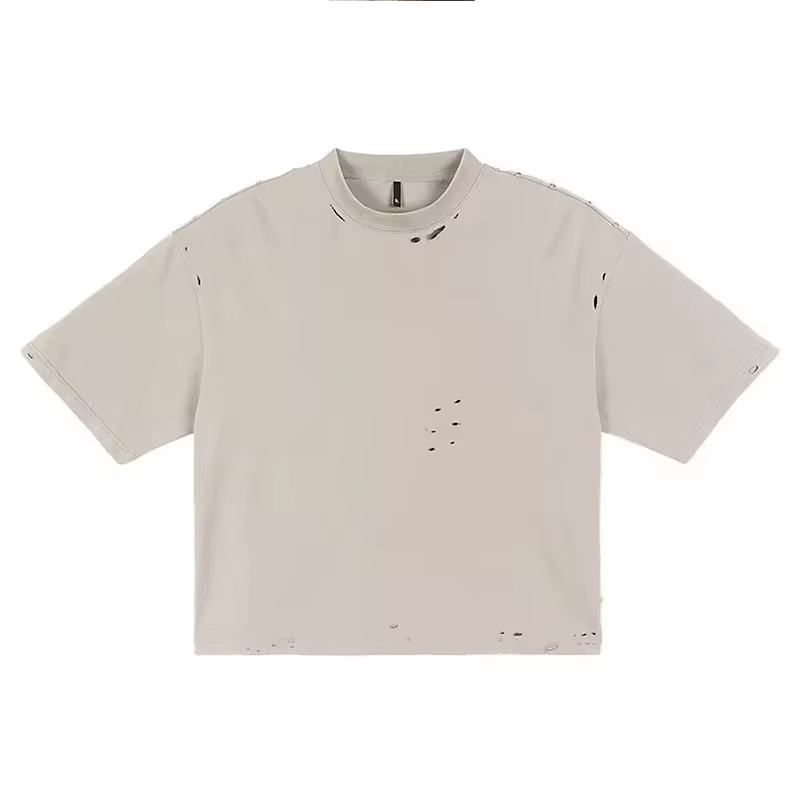
For wholesale buyers operating in fast-moving markets — such as streetwear, event merchandise, or corporate apparel — this pre-built inventory model is particularly valuable. A blank clothes supplier who stocks heavyweight tees, boxy cropped silhouettes, and vintage-washed styles in continuous supply allows buyers to respond to demand spikes without planning months in advance. The practical implication is that buyers can place smaller, more frequent orders and still receive goods quickly, improving cash flow and reducing overstock risk.
Experienced suppliers also analyze purchase history and seasonal demand patterns to calibrate which styles and colorways to prioritize in stock. This data-driven approach to inventory management means that the most commercially relevant blank garments are almost always available, reducing the frequency of back-order situations that slow down wholesale cycles.
Fabric and Material Readiness
Beyond finished goods inventory, a sophisticated blank clothes supplier also maintains a buffer stock of raw materials including fabric rolls, trims, labels, and threads. When a buyer places an order that requires production rather than stock fulfillment, having raw materials on hand eliminates the procurement delay that typically constitutes the longest phase of lead time.
Fabric procurement is especially critical for specialty materials such as heavyweight cotton blends, acid-wash fabrics, or distressed textiles that are not universally available from commodity suppliers. A blank clothes supplier that has secured strategic material partnerships or manages its own fabric inventory is positioned to begin cutting and sewing within hours of an order rather than waiting days for fabric delivery.
This upstream preparedness is an often-overlooked differentiator when evaluating a blank clothes supplier. Buyers focused only on price comparisons may miss the operational depth that separates suppliers capable of true fast turnaround from those who simply promise it on paper.
Production Infrastructure That Enables Speed at Scale
Streamlined Sampling and Approval Processes
For wholesale orders involving custom blank garments — such as specific washes, cuts, or weights — the sampling phase can introduce significant delays if poorly managed. A capable blank clothes supplier addresses this by offering pre-approved style libraries, digital sample approvals, and standardized specifications that reduce back-and-forth between buyer and supplier.
When a buyer selects a style from an established product range, the supplier already has the pattern, grading rules, and construction specifications documented and production-ready. This removes the iterative sample revision cycle that can consume two to four weeks in less-prepared operations. For buyers who need fast turnaround, working with a blank clothes supplier that has a mature product development archive is a practical shortcut that saves considerable calendar time.
Digital tools also play an increasing role here. Suppliers who offer 3D rendering previews, digital tech packs, and remote approval workflows allow buyers to confirm specifications without waiting for physical samples to travel internationally. This digital-first approach can compress the approval phase from weeks to days, a meaningful advantage when market windows are narrow.
Optimized Cut-and-Sew Operations
The production floor itself must be organized for speed without sacrificing quality. A blank clothes supplier operating at scale typically uses modular production lines that can be reconfigured quickly to accommodate different styles and order sizes. Rather than dedicating an entire production line to one style for extended periods, skilled factories rotate efficiently between products, keeping throughput high and turnaround tight.
Capacity management is another core operational discipline. Suppliers who reserve dedicated production capacity for wholesale clients — rather than filling their floors entirely with speculative production — can guarantee manufacturing slots that directly translate to predictable delivery dates. For buyers placing repeat wholesale orders, this reserved capacity model is one of the most effective guarantees of consistent fast turnaround.
Automation of repeatable tasks such as collar stitching, hem finishing, and label attachment also accelerates throughput significantly. A blank clothes supplier who has invested in appropriate production technology can output higher quantities per shift without proportionally increasing labor hours, which directly improves the speed-to-volume ratio that wholesale buyers depend on.
Quality Control Integration Without Slowing Delivery
Inline Quality Checks Rather Than End-of-Line Inspections
A common tension in fast-turnaround wholesale is the perceived trade-off between speed and quality. Suppliers who rush garments through without adequate quality control expose buyers to costly returns, customer complaints, and brand reputation damage. However, the most efficient blank clothes supplier resolves this tension by embedding quality checks throughout the production process rather than performing a single inspection at the end.
Inline quality control means that operators at each station verify their own work against defined standards before passing garments to the next process step. This distributed responsibility catches defects early when they are easiest to correct, preventing defective units from accumulating and requiring costly rework batches. The result is that quality assurance consumes far less calendar time than traditional end-of-line inspection models.
For wholesale buyers, inline QC from a blank clothes supplier translates to receiving shipments that are ready for immediate onward sale or decoration without requiring third-party inspection upon arrival. This removes a layer of delay from the buyer's own receiving process and accelerates time-to-market further.
Standardized Specifications Across Colorways and Sizes
Consistency across large wholesale orders is as important as individual garment quality. When a blank clothes supplier ships five hundred units across twelve colors and six sizes, the expectation is that every piece conforms identically to the approved specification. Deviations in fit, weight, or finish create downstream problems for buyers who are preparing garments for retail or custom decoration.
Sophisticated blank clothes suppliers achieve this consistency through rigorous grading systems, calibrated machinery settings, and documented production standards that operators follow regardless of which line or shift produced the garments. This operational discipline eliminates the variability that causes rejection rates and reshipment delays, both of which are fundamentally incompatible with fast wholesale turnaround.
Logistics and Communication Systems That Drive On-Time Delivery
Freight Partnerships and Flexible Shipping Options
Even when production is complete, a blank clothes supplier must have reliable logistics partnerships to ensure goods reach buyers on schedule. Suppliers who maintain relationships with multiple freight carriers — including express couriers, air freight consolidators, and ocean freight forwarders — can offer buyers flexibility in balancing cost against speed according to specific order urgency.
For time-critical wholesale orders, access to expedited air freight or fast courier services can recover days lost earlier in the cycle. A blank clothes supplier who has pre-negotiated rates and established booking priority with freight partners can move orders faster than one who approaches shipping arrangements reactively on a per-order basis.
Customs documentation readiness is another logistics factor that separates fast-turnaround suppliers from slower ones. Pre-prepared export documentation, accurate country-of-origin declarations, and compliance with destination country import requirements prevent clearance delays that can add unexpected days to delivery timelines. A diligent blank clothes supplier treats documentation as a production deliverable, preparing it in parallel with physical production rather than as an afterthought.
Order Tracking and Proactive Communication
Transparency in order status is not a luxury — it is a fundamental component of fast-turnaround support. When a blank clothes supplier provides buyers with real-time order tracking, production milestone updates, and proactive exception notifications, buyers can plan their downstream operations with confidence and adjust quickly if any delays emerge.
This communication infrastructure also enables collaborative problem-solving. If a fabric shortage or production delay arises, a transparent blank clothes supplier communicates this early, allowing the buyer to explore alternatives — such as a different colorway from stock — rather than discovering the issue only when the shipment fails to arrive on the expected date.
Dedicated account management is a structural feature of the best wholesale supplier relationships. Having a single point of contact who understands the buyer's business, order history, and timeline requirements removes the friction of repeating context with each new order and enables faster resolution of questions and changes.
FAQ
What minimum order quantity should I expect from a blank clothes supplier for fast turnaround?
Minimum order quantities vary by supplier and product type, but many blank clothes suppliers offer lower MOQs for styles held in ready stock compared to made-to-order production. For fast-turnaround wholesale, buyers should seek suppliers who can fulfill orders of 100 to 500 units per style from existing inventory, while larger production runs of custom specifications typically require higher minimums and longer lead times. Clarifying MOQ by fulfillment type — stock versus production — is an important early step in supplier evaluation.
How does a blank clothes supplier handle rush orders without affecting regular clients?
Reputable blank clothes suppliers typically manage rush orders through a combination of reserved production capacity, overtime scheduling, and priority logistics allocation. Suppliers who practice transparent capacity management communicate realistic rush lead times rather than overpromising, which protects the reliability of their commitments to regular wholesale clients. Buyers should ask potential suppliers directly how they handle rush requests and whether there are associated costs or formal rush order programs.
Can a blank clothes supplier provide consistent quality across very large wholesale orders?
Yes, a professionally operated blank clothes supplier is specifically designed to maintain consistent specifications across large volume orders. This is achieved through standardized tech packs, calibrated production equipment, inline quality controls, and rigorous final inspection protocols. Buyers placing very large orders — above 5,000 units — should request the supplier's quality control documentation and may opt to arrange third-party inspection during production to verify standards are being maintained throughout the run.
What information should I provide to a blank clothes supplier to ensure the fastest possible turnaround?
To support the fastest possible turnaround, buyers should provide complete and confirmed specifications at the time of order, including style references, size breakdowns, color selections, labeling requirements, and packaging preferences. Any ambiguity or incomplete information forces the supplier to pause and seek clarification, which directly extends lead time. Buyers who have established a working relationship with their blank clothes supplier and maintain a shared library of approved specifications can streamline repeat orders significantly, as the supplier already holds all the technical details needed to proceed immediately.
Table of Contents
- The Role of Pre-Built Inventory in Accelerating Wholesale Orders
- Production Infrastructure That Enables Speed at Scale
- Quality Control Integration Without Slowing Delivery
- Logistics and Communication Systems That Drive On-Time Delivery
-
FAQ
- What minimum order quantity should I expect from a blank clothes supplier for fast turnaround?
- How does a blank clothes supplier handle rush orders without affecting regular clients?
- Can a blank clothes supplier provide consistent quality across very large wholesale orders?
- What information should I provide to a blank clothes supplier to ensure the fastest possible turnaround?